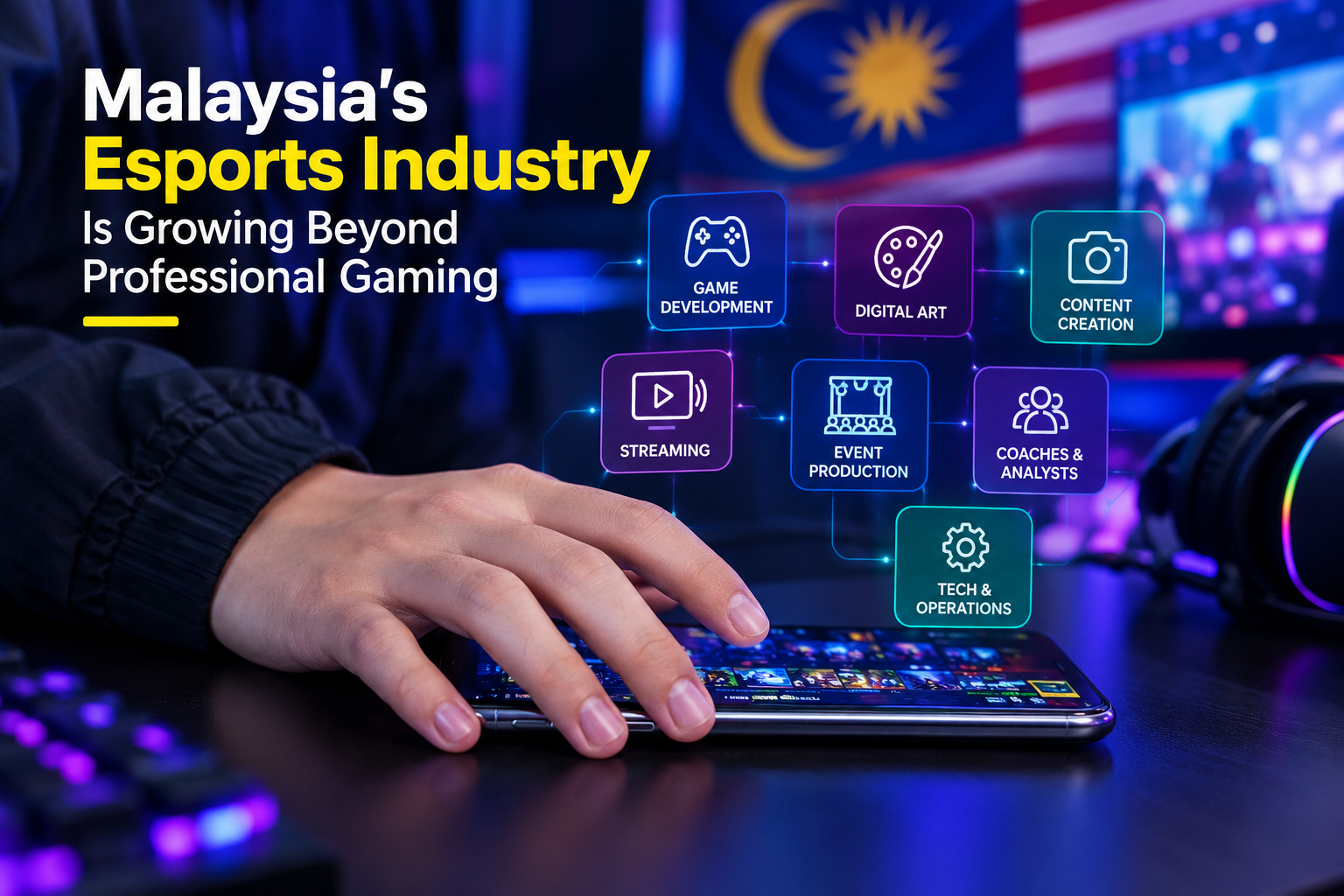
Malaysia’s esports industry is growing beyond professional gaming, with tournaments, content creation, event production and other digital careers becoming part of the country’s wider digital economy.
Esports Is Growing Into a Digital Industry
Malaysia’s esports scene has developed from a leisure activity into a professional industry attracting audiences, commercial partnerships and new career opportunities.
Malaysia Digital Economy Corporation (MDEC) CEO Anuar Fariz Fadzil said esports is part of the country’s wider digital content ecosystem. He highlighted that the industry needs more than professional players, with coaches, production teams and animators also playing important roles.
The wider gaming industry also requires professionals in areas such as game programming, digital art, sound and creative-content production.
More Than Just Professional Players
Esports is opening different career paths for people interested in gaming without necessarily becoming professional players.
Content creators, streamers and analysts are among the roles connected to the industry. Former professional players can also move into streaming and content creation, using their existing audiences to generate income through sponsorships, viewer donations, paid content and merchandise.
The report, citing SociaBuzz and Malaysian digital studio Miura Visual, said independent gaming creators in Malaysia typically earn up to RM2,000 a month, while mid-level creators can earn up to RM10,000, although actual earnings depend on factors such as audience size and engagement.
Malaysia Is Hosting Major Esports Events
The country's growing esports audience is also supporting major tournaments. The M6 World Championship, held in Kuala Lumpur in 2024, recorded more than 4.1 million peak concurrent viewers and over 85 million hours watched.
Malaysia has also hosted events including ESL One Genting, PUBG Global Series, the M1 World Championship and the IESF World Esports Championship.
Government support has also contributed to the ecosystem. Under Budget 2025, RM20 million was allocated to strengthen esports, including talent development and esports arena upgrades. More than 62,000 participants took part in the Malaysia Esports League across five editions from 2021 to 2025.
What Comes Next for Malaysian Esports?
Malaysia's esports growth is now closely connected to its broader digital economy. The country's digital economy contributed 25.5% of GDP in 2025, with the government targeting 30% by 2030.
With investment in esports, gaming and digital creative industries continuing, the sector is creating opportunities across gaming, content, production, technology and business — showing that a career in esports does not necessarily mean becoming a professional gamer.